Polarized lenses, dashboards and dusk: what the film does, and when to take it off
A polarizing film turns a white lake back into water and makes a car dashboard go dark, and both happen for the same reason. What the ophthalmologists say it is good for, where it gets in the way, and why it is not UV protection.
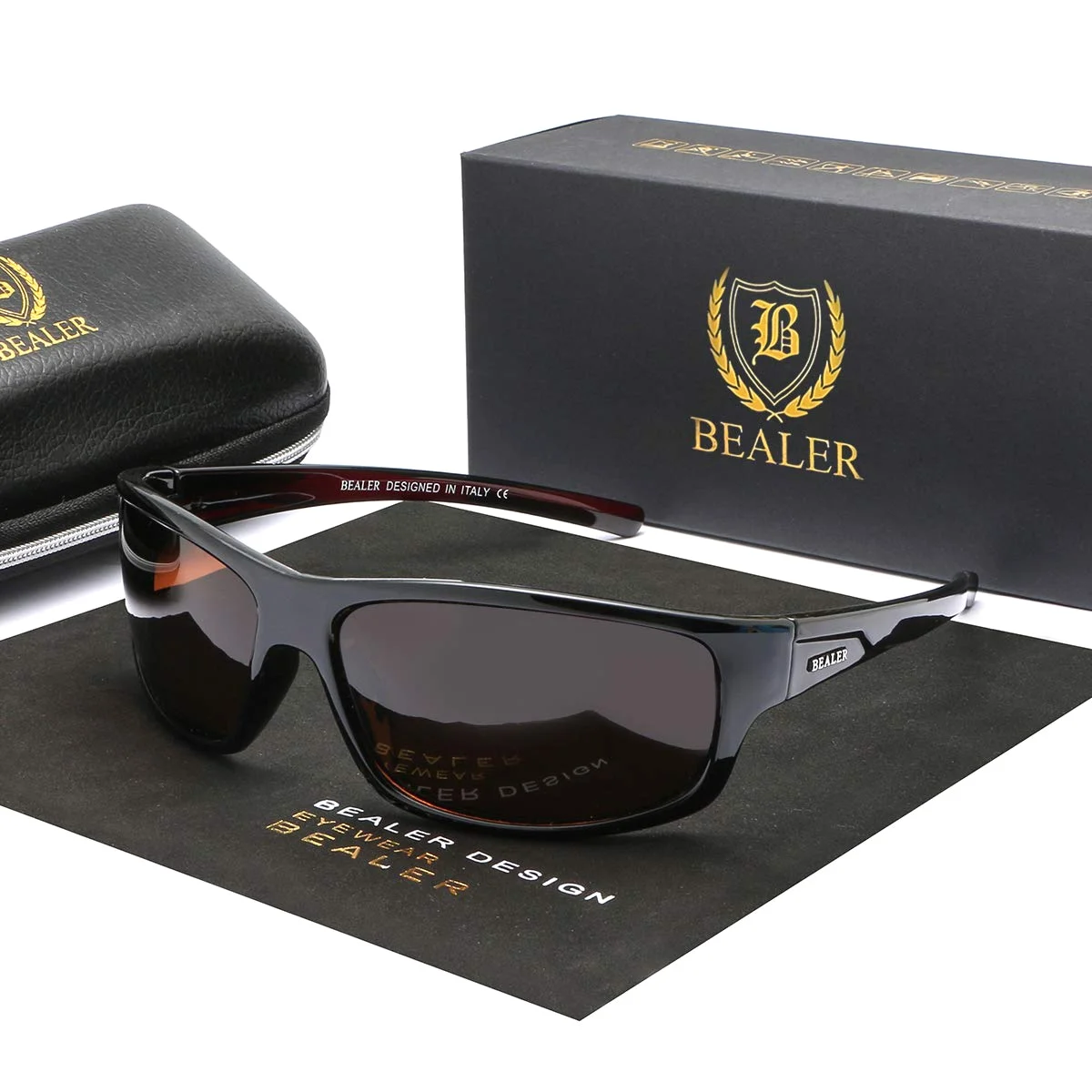
Stand on a jetty at noon and look down. The water is not blue or green or brown; it is white, a flat sheet of light with nothing under it. Put on a pair of polarized sunglasses and the sheet is gone. The water has a colour, the rocks have edges, and if there is a fish it is there. Nothing about the sun has changed. Something about the light reaching your eye has.
That change is the whole of what a polarizing film does, and once you understand it you can also predict the three situations where the same film becomes a nuisance, which is the part the box does not tell you.
What glare is made of#
Light from the sun arrives vibrating in every direction at once. When it bounces off a flat, shiny surface, water, a wet road, the bonnet of the car in front, most of what comes back is vibrating in one direction only, horizontally, in line with the surface it came off. That lined-up light is glare. It is bright, it is flat, and it carries almost no information about what is under or behind the surface.
A polarizing film is a sheet of long molecules stretched into parallel lines, and it works like a grid: light vibrating along the lines is absorbed, light vibrating across them passes. Set the lines vertically in a lens and the horizontally vibrating glare off the lake is stopped while the rest of the scene comes through. The American Academy of Ophthalmology puts the result plainly: polarized lenses cut down on light glare and eyestrain, and people who wear them often feel less tired after spending hours in bright sun.
The lake was never white. The light bouncing off it was, and a polarizing film is a grid tuned to stop exactly that light.
Where the film earns its keep#
The academy's list of places a polarized lens does its best work is short and specific: fishing, boating, the beach, golf and snow. Every one of them is a flat, bright surface at your feet, throwing lined-up light upward. On water the difference is dramatic enough to be the reason most people buy their first polarized pair; on a snow field it is the difference between a white blur and a slope with a shape.
Driving in daylight belongs on that list too, and it is the reason the tinted lenses on our women's rectangle and the brown and orange lenses on the men's wrap exist. The glare that tires a driver comes off the road surface, the bonnet ahead and the windscreen of the car in front, and all three send it back horizontally. On a wet motorway at four in the afternoon the film is doing more for your eyes than the tint is.
The three places it gets in the way#
The first is the one everybody meets: LCD screens. A liquid crystal display emits polarized light, and at the wrong angle a polarizing lens catches it as if it were glare. The academy lists the casualties: car dashboard controls, cash machines, mobile phones, some watches. The screen goes dark or striped, you tilt your head, it comes back. It is harmless, and it is also the free test for whether a lens is really polarized: hold it up to your phone and turn it ninety degrees.
The second is ice. Polarized lenses can make it harder to see icy patches while driving or skiing, because the shine on a patch of ice is exactly the kind of lined-up light the film removes, and the shine is how you were going to spot the ice. On a ski slope this is a real trade: less glare against a less visible patch of hardpack.
The third is night. The film removes part of the light, and after dark you need all of it. The academy's wording is that polarized glasses for night driving may do more harm than good, and there is no version of the film that gets around this; a lens that takes glare out of a headlight is also taking light out of the road. The pouch in the box is for the drive home after sunset.
What the film is not#
It is not UV protection, and this is the sentence on this page worth remembering. Polarization changes which direction of light gets through; ultraviolet is a question of wavelength, and the two have nothing to do with each other. The academy says it in five words: polarization itself does not provide UV protection. It also warns the other way round, that just because sunglasses block UV rays does not mean they are polarized.
The UV job belongs to a separate rating. UV400 means the lens is built to stop wavelengths up to 400 nanometres, which the CDC's tables put as the top of the UVA band; UVB sits below it at 280 to 315 nanometres and mostly gets absorbed by the ozone layer before it arrives, UVC entirely so. Both of the bands that reach the ground are covered by a UV400 rating, and the CDC's own advice is to wear sunglasses that wrap around and block both UVA and UVB. The wrap on our men's shelf is the shape they mean.
Every sunglass lens in this range carries both the polarizing film and the UV400 rating, and the card prints them as two words rather than one. A lens with the film alone has solved your view and done nothing for your eye. A lens with the rating alone has protected your eye and left the lake white.
Darker is not more#
A related mistake, and the academy warns against it: do not assume that the darker the lens, the more it protects your eyes. Tint is how much visible light gets through, and the American Optometric Association's figure for a good sunglass lens is that it should screen out 75 to 90% of it; the men's lens here is rated to absorb 85%. But that is comfort, not protection. A very dark unrated lens opens your pupil wide behind it and lets in more ultraviolet than no lens at all, which is the one case where a pair of sunglasses is worse than squinting.
| On the card | What it changes | What it does nothing about |
|---|---|---|
| Polarized | Glare off water, road, snow and bonnets | Ultraviolet; visibility at night; LCD screens (it darkens them) |
| UV400 | Ultraviolet up to 400 nm: UVA and UVB | Glare; brightness; colour |
| Tint (grey, brown, orange) | How much visible light gets through, and its colour | Ultraviolet, unless the lens is also rated |
| Mirror coat | Reflects more light before the tint starts | Nothing the tint does not already do; goes dim under cloud |
How to use all of this on a Tuesday#
Daylight, outdoors, on or near a flat bright surface: the film is the point of the pair, and grey is the tint to start with because it leaves colours alone. Behind a wheel in the day: the film helps, and if the dashboard goes odd at one angle, that is the film working, not a fault. On a slope with hard ice: know that the shine you would have used to spot it is the thing being removed. After dark: take them off, in the academy's words and in ours.
And when you pick up any pair, ours included, look for two words on the card, not one. The film is what you feel on the first afternoon. The rating is what you never feel, and it is the one your eyes will thank you for in thirty years.
One button, the whole BEALER range
Every lens colour, frame size and pack count in the BEALER catalogue sits behind this button, with the price from our last update beside it. Read the millimetres off a pair you already own, check them against the card, and the order goes through our retail partner.