How to read 62-17-123 off a temple and size a frame from a pair you own
The inside of almost every temple carries three numbers, and they are enough to know whether a frame you have never held will fit. Here is what each one measures, where to find it on your own pair, and how far off is too far.
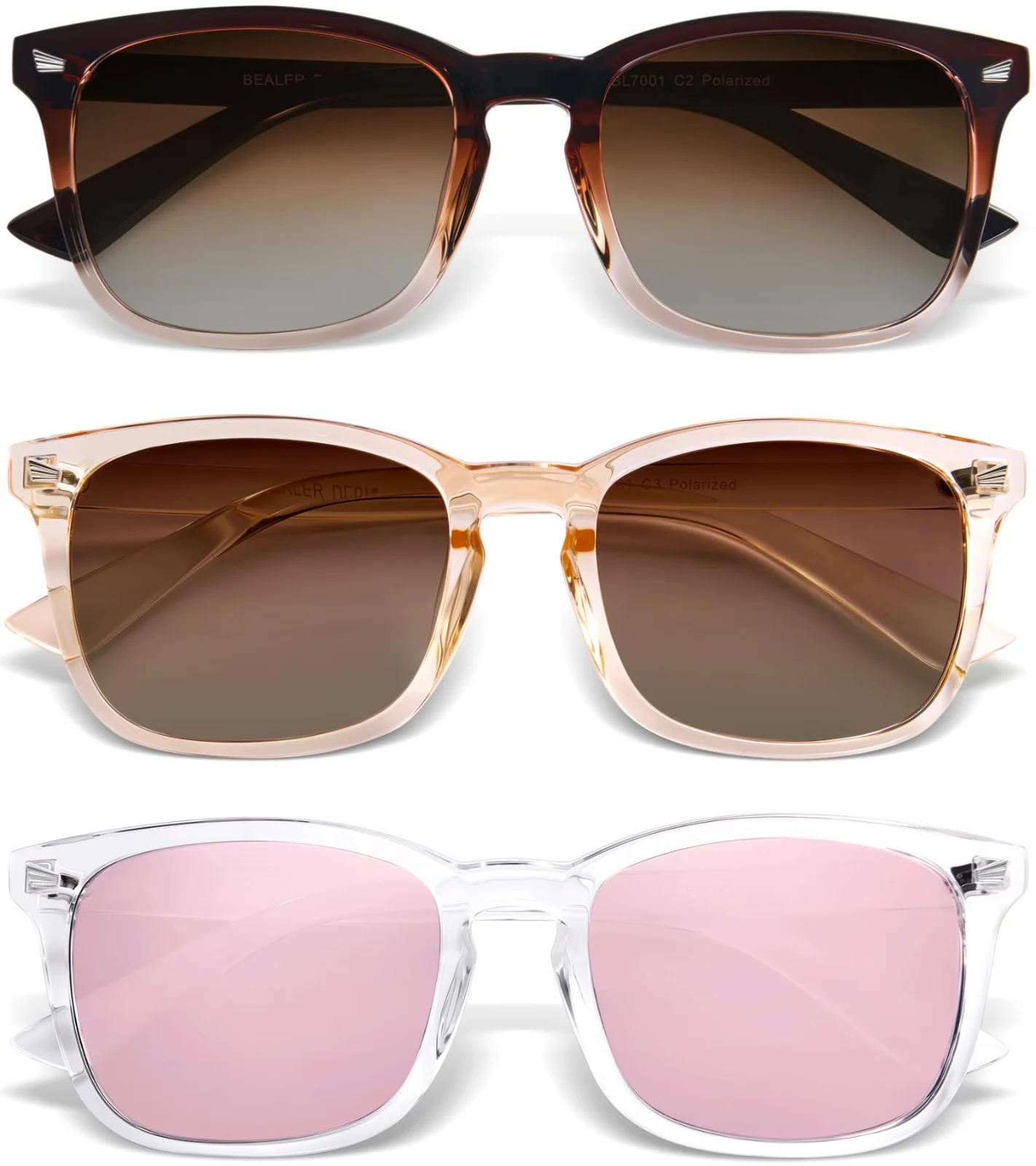
Take off the sunglasses you are wearing now, or the pair on the dashboard, and look at the inside of the left arm. Somewhere between the hinge and the tip there is a short line of small print, and in it three numbers separated by dashes or squares: something like 58□17 140, or 62-17-123. Most people have worn glasses for years without reading it. It is the most useful thing printed on the frame.
Those three numbers are the lens width, the bridge and the temple length, all in millimetres, and once you know what each one measures you can size a frame from a card on a screen with more confidence than you can from trying it on in a shop for four seconds under fluorescent light.
The first number: lens width#
The lens width is the horizontal distance across one lens at its widest point. It is not the distance across the whole frame, and it is not how tall the lens is; it is how wide one eye's window is.
On the frames here it runs from 45 mm on the children's frame to 62 mm on the men's sport wrap, with the women's rectangle at 52 and the round screen frame at 51. Those numbers tell you two things at once. The first is scale: a 62 mm lens is a big lens, and on a narrow face it reads as goggles; a 51 mm lens is a small one and on a broad face reads as spectacles. The second is coverage. A wider lens, especially one that curves, closes the bright strip at the edge of your vision that a flat, narrow lens leaves open, and on water or snow that strip is where the glare lives.
The rule of thumb is two millimetres. Within two of the lens width on a pair you already like, a new frame will read as the same size on your face. Five or more and it is a different frame, larger or smaller, whatever the photograph suggests.
The second number: bridge#
The bridge is the gap between the two lenses, measured at the narrowest point, and it is the number that decides where the frame sits on your nose. It is also the number people ignore and then wonder why a frame slides.
A bridge that is too narrow for your nose perches the frame high, so the lenses sit above your line of sight and the pair creeps down all day. A bridge that is too wide drops the frame onto your cheeks and leaves a gap at the top. The frames here run from 16 mm on the women's rectangle, through 17 on the men's wrap, to 18 on the round screen frame, and the difference between 16 and 18 is the difference between a frame that sits and one that slides on the same nose.
Read the bridge off your current pair before anything else. If it fits, that number is your number, and a frame one millimetre either side of it will behave the same way. Two millimetres and you will notice.
The third number: temple length#
The temple is the arm, from the hinge to the tip behind your ear, and its length decides whether the frame grips or rests. The frames here make the difference plain: the men's wrap has a 123 mm arm, short so the tip presses against the side of the head above the ear and holds when you turn your head fast on a bike or a boat; the women's rectangle has a 138 mm arm, long enough to hook behind the ear and rest; the screen frame has a 145 mm arm, the longest in the range, because a frame worn for eight hours at a desk should not grip anything.
Short arms are a feature on a sport frame and a fault on a reading frame, and the number lets you tell which one you are buying before the box arrives. If your current pair has a 140 and you are looking at a 123, expect a snug fit, and if one of the reviewers has already called it snug, believe them.
The two numbers the temple does not carry#
Frame width is the whole distance across the front of the frame from outer edge to outer edge, and it is the number that decides whether a frame pinches your temples or floats off them. It is roughly two lens widths plus the bridge plus the thickness of the rims, and it is the figure to hold a ruler against. Stand in front of a mirror, hold a ruler flat across your face at the temples and read the width; the frame should match that number, not exceed it. The men's wrap is 137 mm, the rectangle 139, the round frame 138, which is why one reviewer with a wider head found the rectangle too small and said so. Her ruler would have told her the same thing.
Lens height is the vertical measurement of one lens, and it matters for two reasons. On water and snow the glare comes up as well as down, and a taller lens covers the cheekbone. Behind a windscreen the brightness is in the sky, and a taller lens keeps the top edge of the frame out of that band. The wrap is 37 mm tall and relies on its curve for coverage; the rectangle is 42, which is what keeps the sky out when you drive; the round frame is 45, which at a desk is simply more of your view without a rim in it.
| Frame | Lens width × height | Bridge | Temple | Frame width |
|---|---|---|---|---|
| Men's sport wrap, BL6608 | 62 × 37 mm | 17 mm | 123 mm | 137 mm |
| Women's retro rectangle | 52 × 42 mm | 16 mm | 138 mm | 139 mm |
| Round screen frame, BL9001 | 51 × 45 mm | 18 mm | 145 mm | 138 mm |
| Children's frame, BL8002 | 45 mm wide | cut for ages 3 to 9 | cut for ages 3 to 9 | bends to fit |
Doing it in five minutes#
Find a pair that fits. Read the three numbers off the temple and write them down. Hold a ruler across your face at the temples for the frame width. Then read the same numbers off the card of the frame you are considering, and apply the tolerances: two millimetres on the lens width, one on the bridge, five on the temple, and the frame width should not exceed your own.
If your pair has no numbers on it, a ruler does the same job. Lens width across one lens at its widest; bridge across the gap at its narrowest; temple from the hinge screw to the tip, following the arm rather than cutting the corner.
The child's frame is the exception#
Children's frames are cut to an age band rather than to a face, and the one here is cut for three to nine on a 45 mm lens. There is no bridge or temple figure worth printing, because a frame that bends takes up the slack that a measurement would otherwise catch. Reviewers have it on two-and-a-half-year-olds and describe it as a little big and staying on; by nine it is at the small end. The check that replaces the numbers is physical: bend the arms out and back once before it goes on, and a frame that returns is a frame that fits well enough.
What the numbers cannot tell you#
Whether you will like the shape. Whether the tint suits the light you drive in, which is a different article. Whether the fit reads as sporty or as spectacles, which is your face and not the frame. But they can tell you, before the box is opened, whether a frame will sit where the one on your dashboard sits, and that is most of what a return is about.
One button, the whole BEALER range
Every lens colour, frame size and pack count in the BEALER selection sits behind this button, with the price from our last update beside it. Read the millimetres off a pair you already own, check them against the card, and the order goes through our retail partner.